
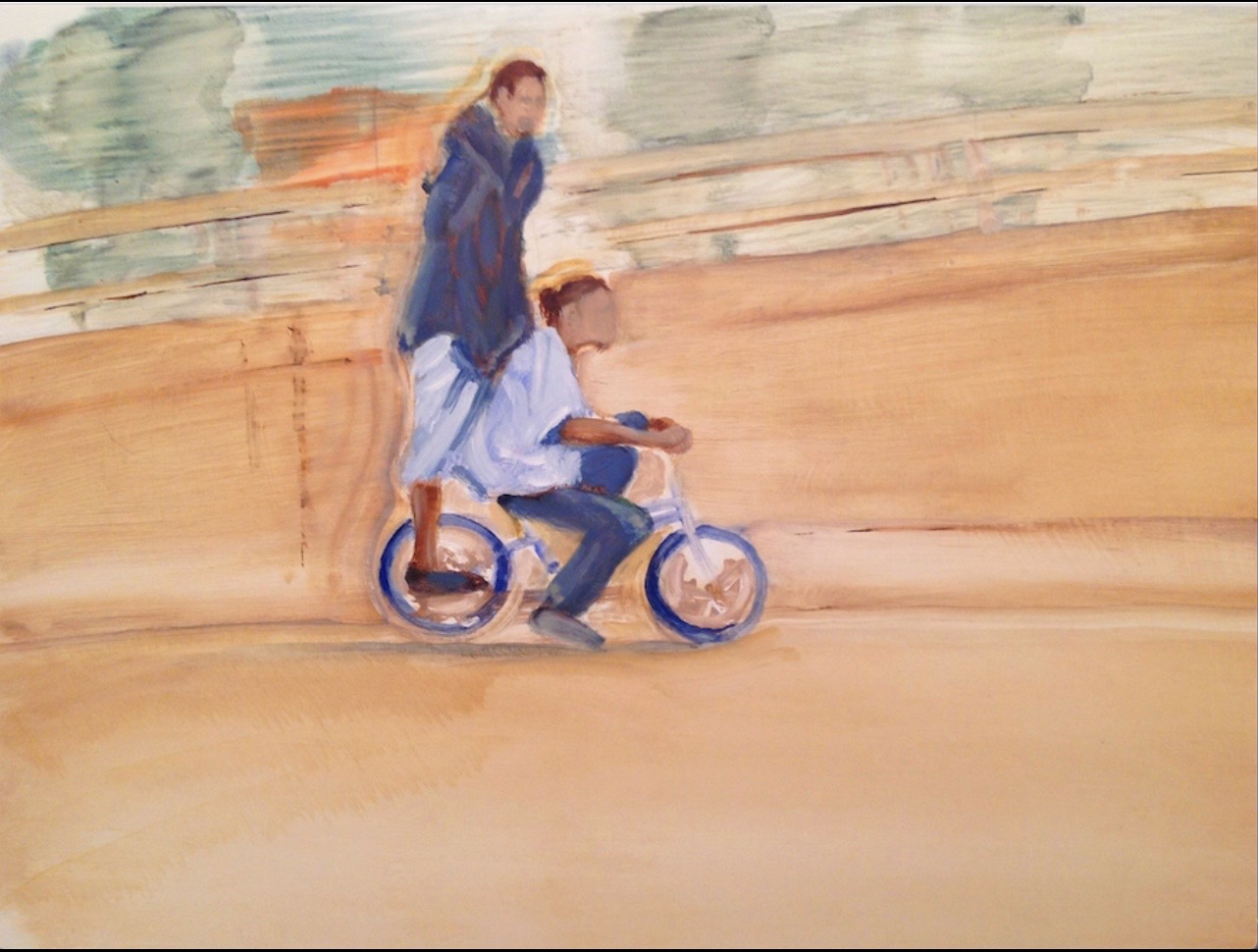
A reflection from Milton R. Trice Part V
Street Presence: Art, Survival, and the Unseen Narratives of the City
A reflection on youth, curiosity, rebellion, and the quiet moments that shape creative memory.

By Worldwide Art Advocacy
The Bowery Boys Are Still Among Us

One day, I drove downtown in Oklahoma City, stopping near the historic Colcord Building.
As I stepped out of my car, a couple of young boys on bicycles rode up to me and asked if it would be okay for them to climb onto the roof of the old Myriad building.
Looking upward, I could already see two of their friends standing on top, waving the others on.
I told them I hoped the older boys knew what they were doing, though I added that there was probably a security guard posted nearby—quietly hoping the warning might discourage them.
As I walked away, I heard the younger boys shouting back to the others that they were staying down.
Moments later, two bottles exploded harmlessly in the street below, missing the boys entirely.
I couldn’t help but think how much those children reminded me of my own childhood—filled with curiosity, adventure, and the constant temptation of risk.
Drawing the City

Later, while standing on the sidewalk deeply focused on a drawing of the Colcord Building, I heard a young voice ask:
“Mister, are you an artist? What are you drawing?”
It was one of the same boys from earlier.
“Yes,” I replied. “I’m an artist. I’m drawing this beautiful building.”
“Why?” he asked.
And I answered:
“Because it’s there—and I love to draw.”
I showed him the sketch I was working on, along with the vine charcoal and art gum I was using. I even explained how charcoal could be made by hand.
The boy seemed fascinated.
Before long, all of his friends had gathered around me, asking questions one after another.
I took my time answering each one.
Somewhere in the back of my mind, I thought: perhaps one of these boys might someday become a great artist themselves.
And if there was any way to encourage that creative spark, I wanted to do it.

A Moment of Unexpected Respect
After watching quietly for some time, the first boy suddenly looked at me and said:
“I bet you wish we’d leave you alone.”
I smiled and answered:
“No. You can stay and watch as long as you want.”
The boys thanked me, said goodbye, and rode off together down the street.
As I walked back toward my truck, I noticed another group of boys crossing nearby.
These ones were older—thirteen or fourteen perhaps—towering awkwardly over bicycles that looked far too small for them, likely bikes they had owned since childhood.
Mischief seemed written across their faces instantly.
And in that moment, I realized something familiar.
History moves in cycles.

Youth repeats itself generation after generation—through rebellion, curiosity, friendship, risk, and imagination.
Much like the boys on those bicycles.
And somehow, the Bowery Boys are still among us.
Closing Reflection

In “Bowery Boys,” Milton R. Trice reflects on an ordinary encounter that quietly unfolds into something larger: a meditation on youth, artistic encouragement, memory, and the repeating patterns of human behavior.
Rather than presenting the boys as troublemakers alone, the story reveals them as symbols of possibility—restless spirits suspended between innocence and rebellion.

Like many of Milton’s writings and paintings, the deeper subject is not merely what was witnessed, but what was understood afterward: that creativity often begins in curiosity, and that even brief human encounters can leave lasting impressions across time.
“Because sometimes, the most powerful stories are not staged—they simply appear, and remain.”
Step Into the World of Milton Trice
For over four decades, Milton Trice has documented the overlooked realities, quiet encounters, and spiritual atmosphere of Oklahoma City through painting and storytelling.
Worldwide Art Advocacy
supporting artists and creative voices around the world.
 Worldwide Art Advocacy