A reflection from Milton R. Trice Part II
By Worldwide Art Advocacy
Little did I know that the homeless would later become my genre.
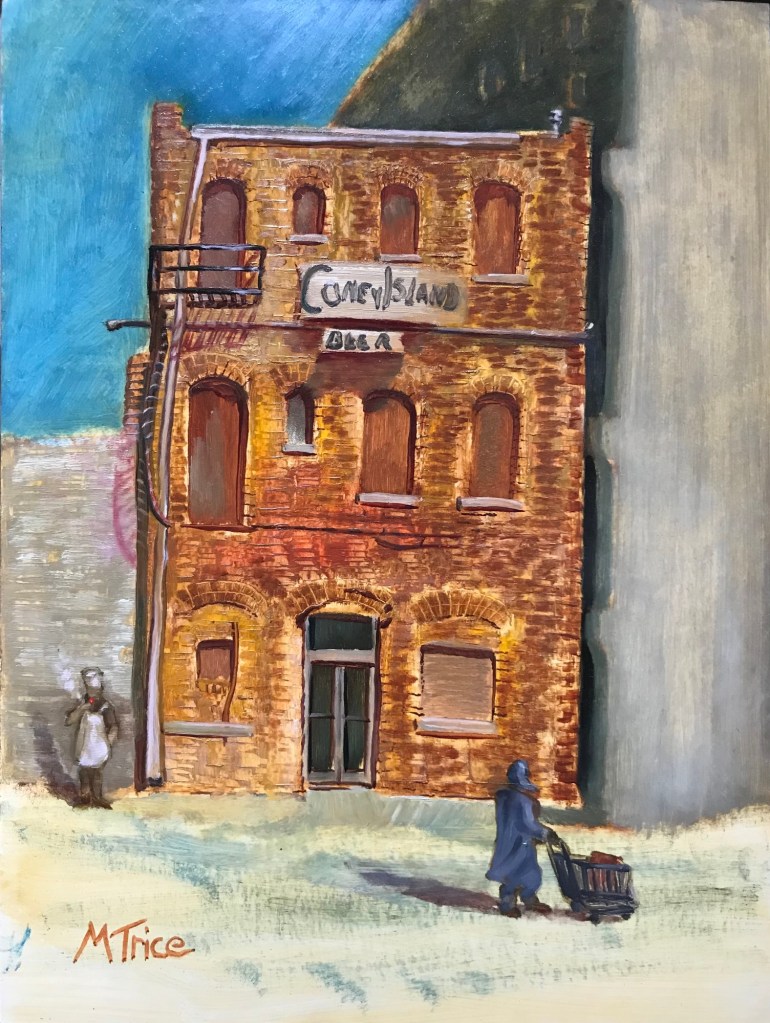
One of my earliest oil paintings in downtown Oklahoma City captured something I hadn’t planned—a homeless man wandered into the scene at the last moment. I remember pausing at the irony of a sign that read “Coney Island”—a symbol of leisure and escape—set against the reality unfolding in front of me.
That contrast stayed with me.
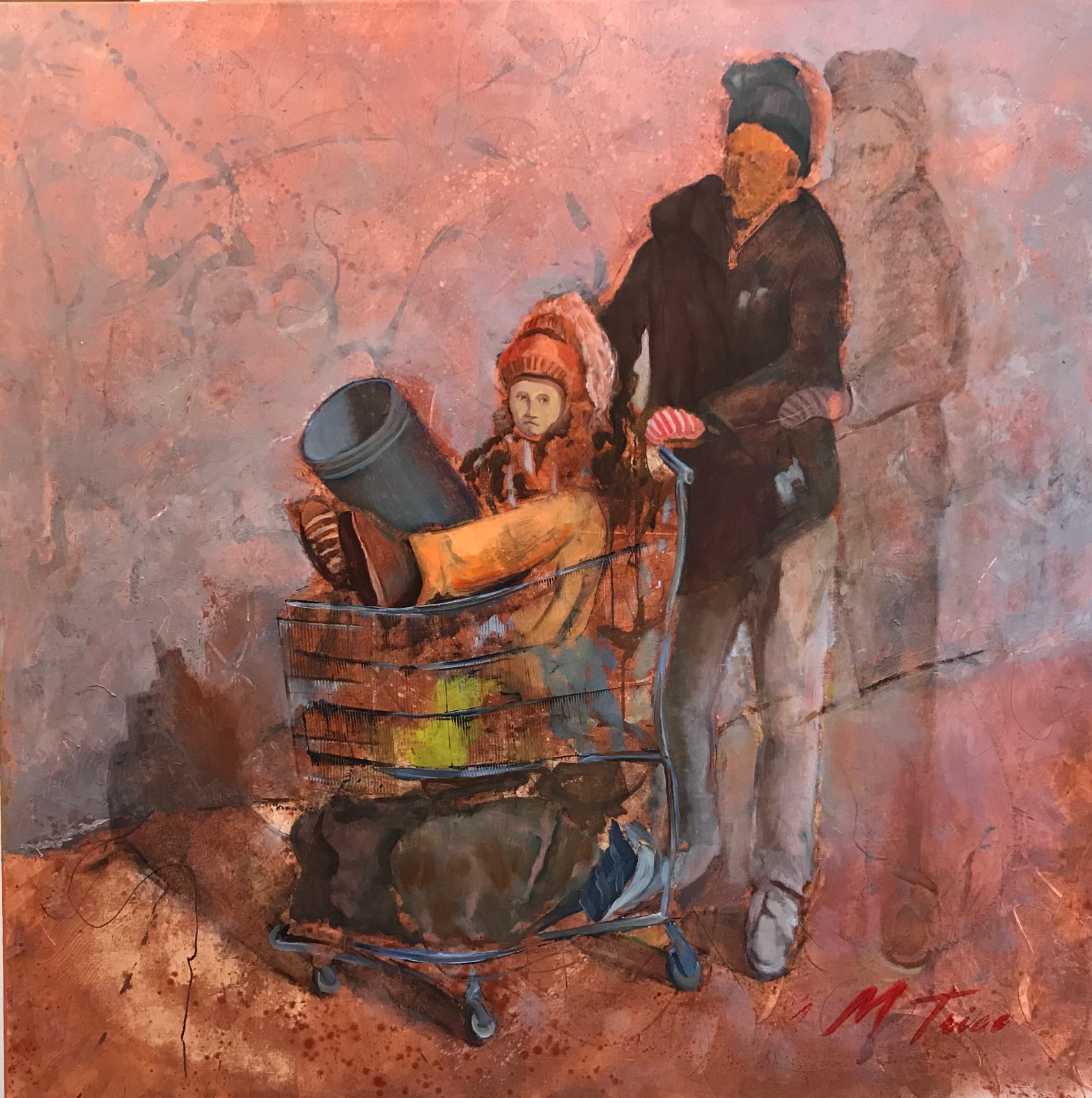
For over four decades, I have painted the homeless on the streets of Oklahoma City—not as subjects I set out to find, but as a presence that continually revealed itself within the environments I was drawn to paint. They were already there, embedded in the city’s rhythm, quietly shaping its truth.
At home, during those same years, my children played with a small grocery cart. It had been loaned to us by Elisabeth Oppenheim when we moved to Randel Rd. When they outgrew it, she returned to retrieve it.
It was only then that we realized what it truly was.
That small cart was the original prototype created by Sylvan N. Goldman—an invention that would go on to redefine everyday commerce. It was later placed in the Omniplex Museum as part of its historical collection.
We had been living alongside the beginning of something significant, without knowing it.

Over time, another realization began to take shape.
The grocery cart—once designed for convenience, for carrying goods through aisles—had undergone a profound transformation.
It became a mobile home.
A container of life.

A symbol of survival.
Across cities, it followed the movements of those navigating the margins—holding not just belongings, but fragments of identity, memory, and endurance.
What began as a tool of consumption had become an artifact of necessity.
And without fully realizing it, I had been painting that transformation all along—

the people, the carts, and the quiet, persistent stories moving through the streets.
My work is not about spectacle. It is about presence.
About witnessing what is often overlooked, yet deeply embedded in the fabric of our society.
Because sometimes, the most powerful stories are not staged—
they simply appear, and remain.

Worldwide Art Advocacy
supporting artists and creative voices around the world.
 Worldwide Art Advocacy