
25 Essential Rules of Photography
Master composition, lighting, and creativity to take stunning photos.
1. Understand the Rule of Thirds
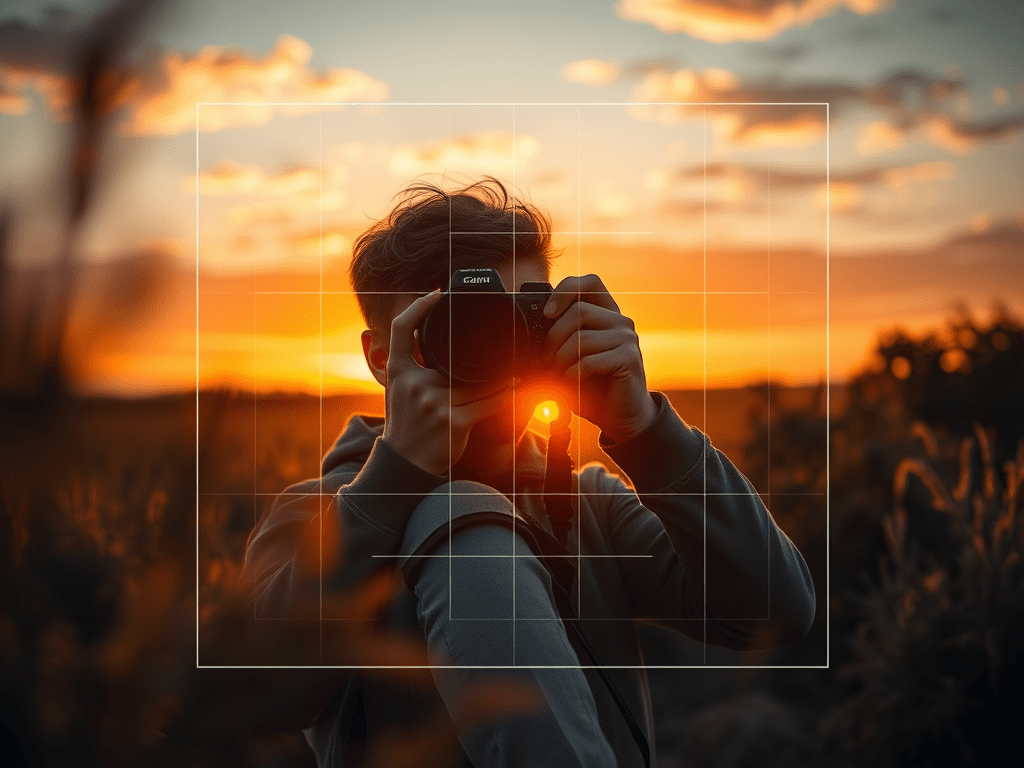
Divide your frame into a 3×3 grid and place key subjects along the lines or intersections for balanced composition.
2. Pay Attention to Lighting
Great lighting makes or breaks a shot. Use natural light whenever possible and understand how shadows affect your subject.
3. Focus on Composition
Frame your subject thoughtfully, avoid clutter, and experiment with leading lines, symmetry, and framing techniques.
4. Keep Your Horizon Straight
A tilted horizon can ruin an otherwise perfect shot. Use the grid feature on your camera to align it properly.
5. Adjust White Balance
Different lighting conditions affect color. Adjust your camera’s white balance settings to keep colors accurate.
6. Experiment with Angles
Don’t just shoot at eye level. Try high angles, low angles, or unusual perspectives for dynamic compositions.
7. Use Leading Lines
Guide the viewer’s eye through the image with natural or man-made lines like roads, fences, or pathways.
8. Keep Your Subject in Focus
Make sure your main subject is sharp. Use manual focus or tap on your screen for precise control.
9. Avoid Overexposure
Check your exposure settings to prevent highlights from being too bright and losing detail.
10. Shoot in RAW
RAW files give you more flexibility in post-processing, allowing for better adjustments in exposure and color. The Beginner’s Photography Guide
11. Consider the Background
Avoid distracting backgrounds that take attention away from your subject. Blur backgrounds with a shallow depth of field.
12. Use Natural Frames
Frame your subject using doors, windows, trees, or archways for a more interesting composition.
13. Try Different Depth of Field
Use a shallow depth of field for portraits to isolate the subject or a deep depth of field for landscapes.
14. Capture Movement
Use a slow shutter speed for motion blur or a fast shutter speed to freeze action.
15. Shoot in Golden Hour
Take advantage of the soft, warm light at sunrise and sunset for stunning natural lighting.
16. Understand Your Camera Settings
Learn how aperture, shutter speed, and ISO work together for better control over your shots.
17. Fill the Frame
Get close to your subject to eliminate empty space and create a more impactful image.
18. Don’t Be Afraid of Negative Space
Empty areas in your composition can emphasize your subject and create a sense of balance.
19. Pay Attention to Color Theory
Use complementary colors to make your subject pop or stick to a consistent color palette.
20. Shoot in Different Weather Conditions
Rain, fog, or even stormy weather can add drama and mood to your photographs.
21. Use a Tripod
For low-light shots, long exposures, or precision framing, a tripod ensures stability.
22. Take Multiple Shots
Don’t rely on just one frame. Capture multiple angles and expressions to increase your chances of getting the perfect shot.
23. Learn from Other Photographers
Study the work of great photographers to understand their composition, lighting, and storytelling techniques.
24. Edit Your Photos
Post-processing enhances your shots. Adjust exposure, contrast, and color for a polished final image.
25. Break the Rules
Once you master the basics, experiment and develop your own unique photographic style.
Start Creating Stunning Photographs Today!
Mastering these rules will help you capture breathtaking images and express your artistic vision.
Discover more about global art forms:
Global Art Forms |
Submit Your Portfolio
 Worldwide Art Advocacy